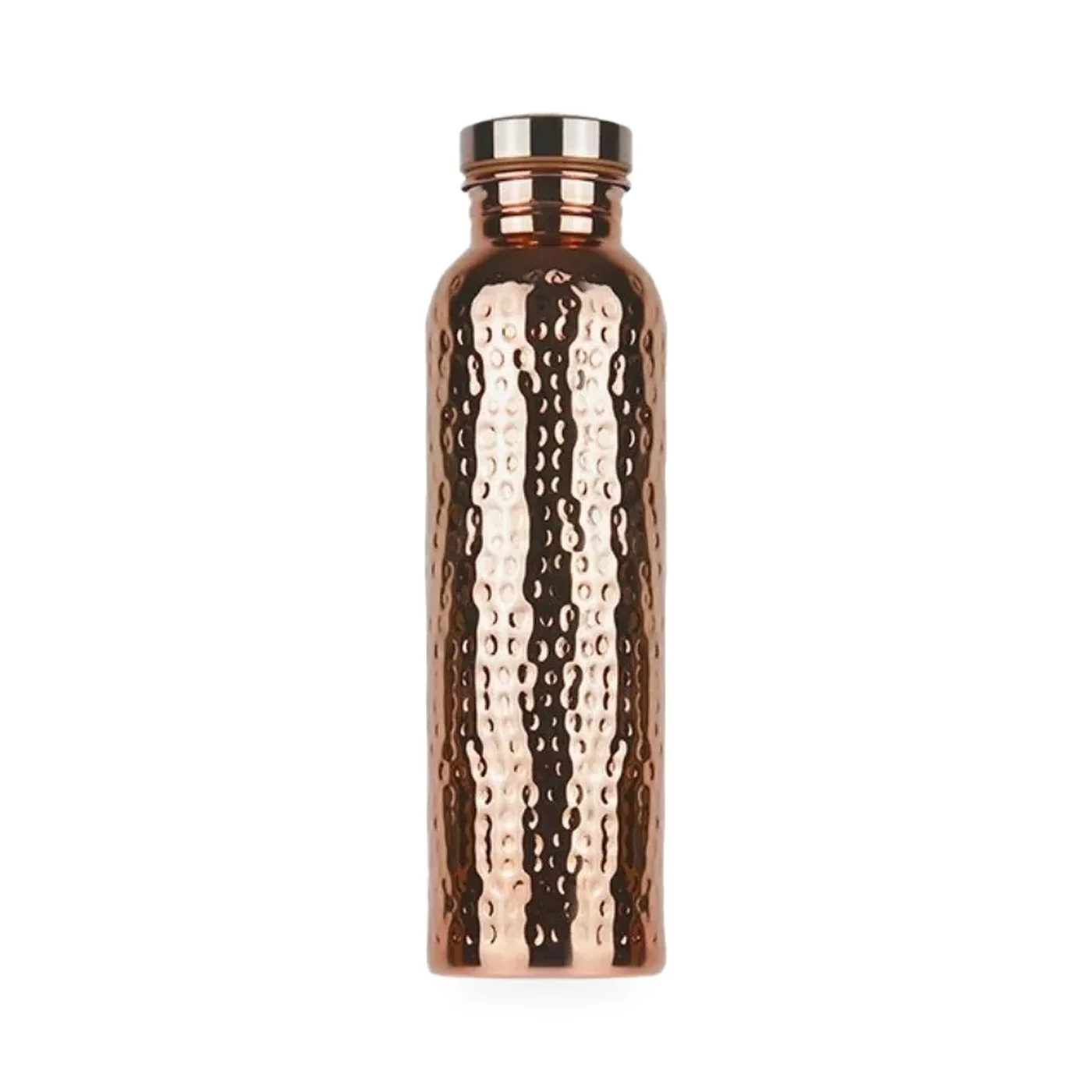
Start with the material description
Copper and copper-plated are not the same construction. A copper bottle has copper throughout its main body; a plated bottle has a thin copper layer over a different base material. Both can look copper-coloured when new. Product photographs, a hammered pattern and a shiny finish cannot establish the metal underneath. Before buying, look for a clear statement of the body material and ask whether the inside has a lining or coating.
Material descriptions also need context. A seller should be able to explain the composition and distinguish the body from separate cap components or seals. Puura 800 has a hand-hammered copper-finish exterior and an 800ml body with no plastic liner. If material certainty matters to you, request supporting documentation rather than relying on appearance alone.
“Copper and copper-plated are not the same construction.”
Weight is a clue, not proof
Copper is a relatively dense metal, so a substantial feel can be consistent with copper construction. However, bottle size, wall thickness and the base metal of a plated bottle all affect weight. A thick steel bottle can feel heavier than a thin copper one. Compare weights only between bottles of similar capacity and construction, and treat weight as one clue alongside documentation and the other checks below.
Use a magnet carefully
Copper is not attracted to an ordinary magnet. Strong attraction on the bottle body suggests a magnetic base material beneath the surface. Test the body rather than only the cap, which may contain different components. Lack of attraction does not establish the body material: aluminium and some stainless steels are also non-magnetic, and can be copper-plated. This test can rule out some constructions, but it cannot certify purity.
Surface wear and the scratch test
On a plated object, a deep enough scratch may reveal a different-coloured metal underneath. Copper remains copper-coloured below its surface. Deliberately scratching a new bottle damages it and may affect returns or its finish, so inspect existing wear instead or ask the seller for a sample. Never scratch the drinking surface as a casual test. Patina alone is not proof of solid construction, because a copper-plated surface can darken too.
Ask for a lab certificate
For stronger evidence, ask for a material analysis or lab certificate linked to the product or batch. Check what was tested, the reported composition and whether the result concerns the full body or only its surface. Surface measurements alone may miss an underlying base metal. A transparent supplier should explain the evidence and any limitations. No single home check replaces appropriate testing, and no material test changes the bottle’s intended use: follow the maker’s care instructions and use Puura with plain still water only.
Frequently asked questions
Does a magnet prove that a bottle is copper?
No. Copper is not magnetic, but several other metals are not magnetic either. Attraction is a useful warning sign; no attraction is not proof of purity.
Does patina establish the bottle’s body material?
No. A copper-plated surface can develop patina too. Construction details and suitable testing offer stronger evidence.
Should I scratch my new bottle?
No. Ask for documentation or inspect existing wear instead of damaging the bottle or its drinking surface.
