Choose for how you actually drink
Copper and stainless steel can both make durable reusable bottles, but they suit different priorities. Think about what you carry, how long you want it kept cold and how much care you are willing to give the finish. Neither material makes every bottle equally good: wall thickness, cap design, seals and construction matter as much as the name of the metal. Compare specific products rather than assuming that all metal bottles behave alike.
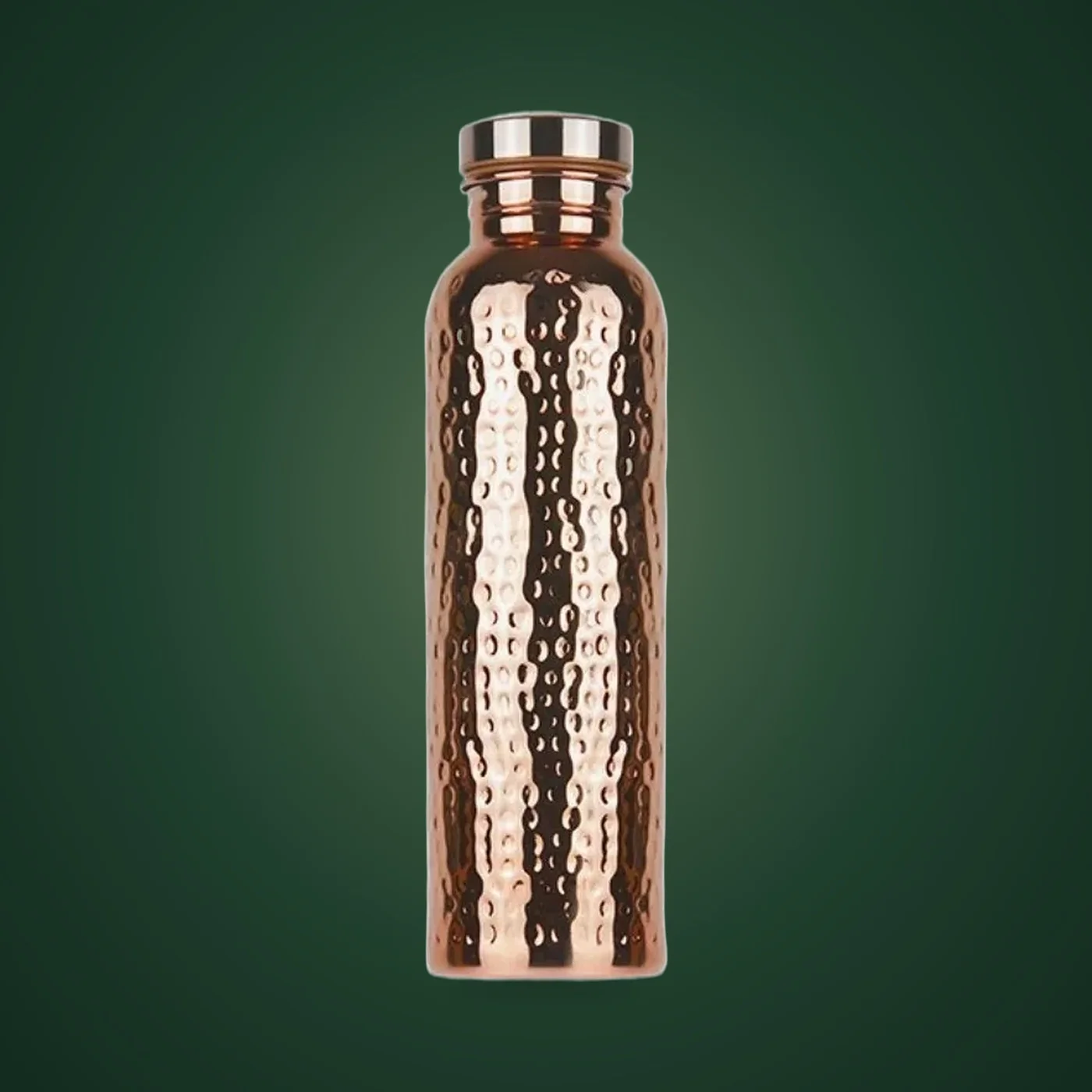
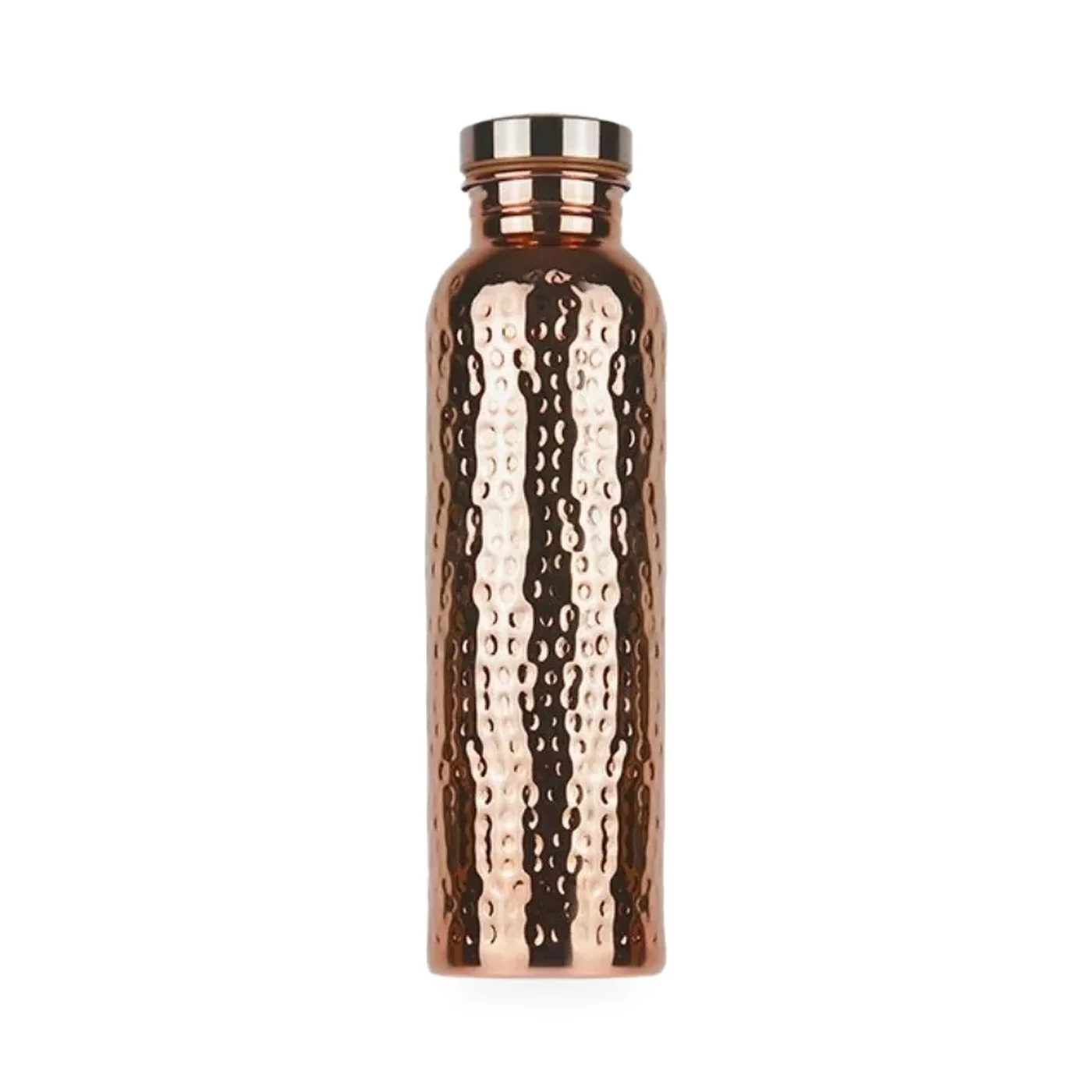
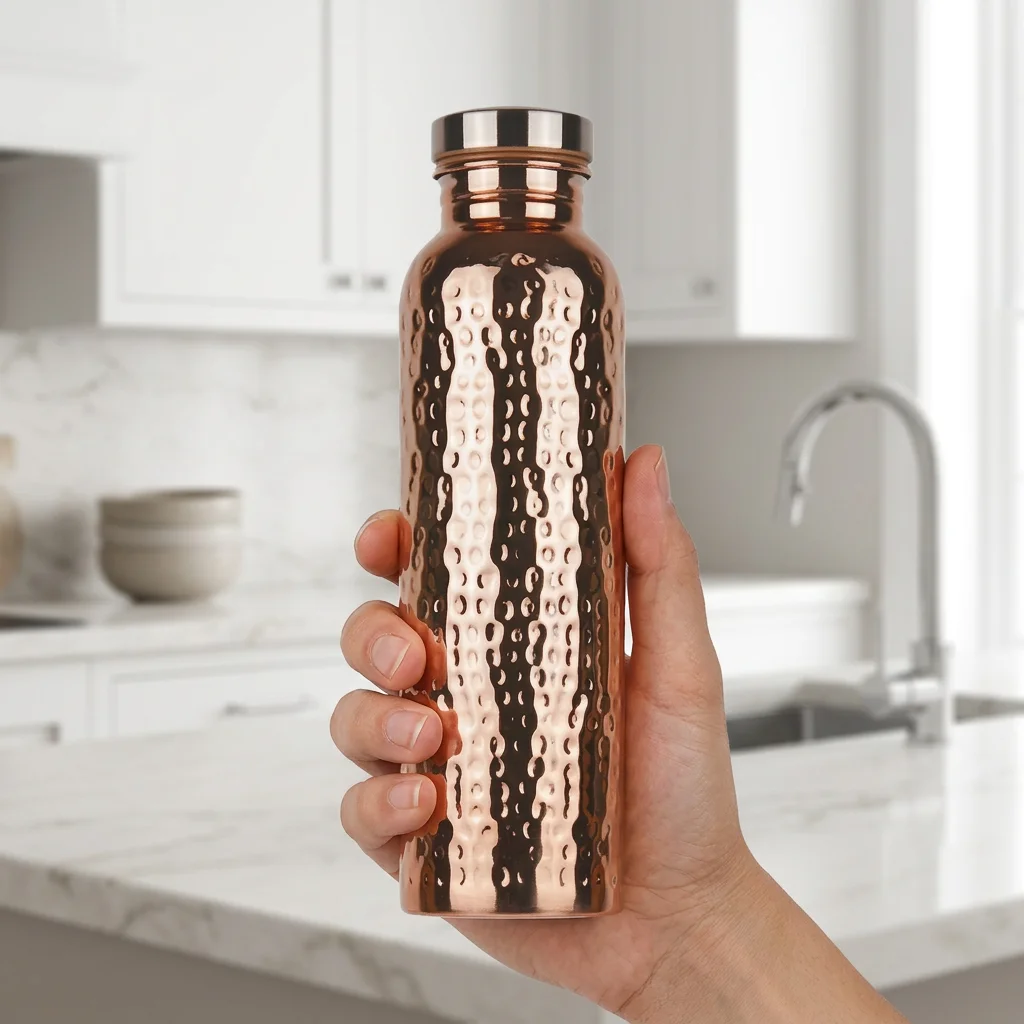
Puura 800 is an 800ml copper-finish stainless steel bottle with a hand-hammered exterior, no plastic liner in the body and a secure stainless steel lid. It is intended for plain still water and hand washing. Stainless steel bottles vary considerably, from lightweight single-wall designs to larger vacuum-insulated models. Check the maker’s instructions for drinks, cleaning and any replaceable parts before making a choice.
“Think about what you carry, how long you want it kept cold and how much care you are willing to give the finish.”
Materials and liners
Copper means the main body is copper throughout, not merely a copper-coloured plating. Stainless steel is an alloy, commonly made using iron, chromium and other elements. Many stainless steel bottles have an unlined steel interior; it would be inaccurate to suggest that steel always needs a plastic liner. Aluminium bottles are a different category and often use an internal coating. Check the actual interior specification rather than grouping all silver-coloured metals together.
Caps and seals deserve their own check. A bottle described by its body material may still have a gasket or other components made from different materials. If avoiding a particular material is important to you, ask the seller about the complete construction, not only the outer shell. An attractive finish cannot tell you what touches the water inside.
Insulation: copper is not a flask
The Puura 800 is not insulated and does not promise to keep water cold or hot for a set number of hours. Its temperature changes with its surroundings. A copper finish does not establish insulation, so Puura 800 is not sold as a substitute for a vacuum flask. A double-wall vacuum-insulated stainless steel bottle can slow heat transfer much more effectively. If temperature retention is your main requirement, choose a product designed and rated for that purpose, and follow its drink-temperature guidance.
Lifespan and everyday wear
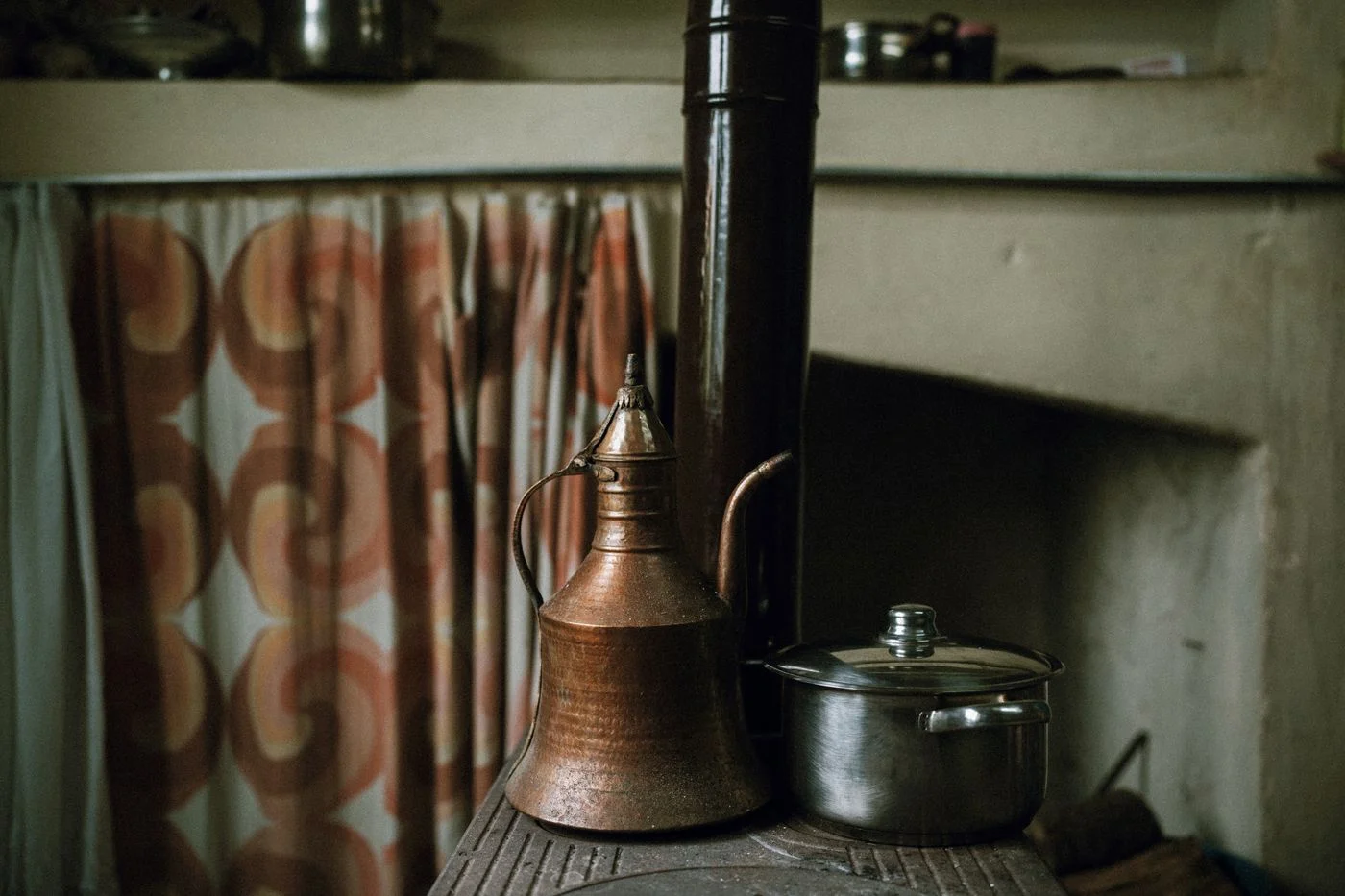
Both materials can last for years with suitable use and care. Neither is resistant to all dents, damaged threads or worn seals. Copper is softer than many stainless steels and develops a changing patina; stainless steel generally keeps a more consistent appearance but can still scratch. A bottle’s useful life depends on its construction, treatment and access to support, not a guaranteed material-wide lifespan. Normal wear to the finish is not a manufacturing fault.
Care and the right fit
Choose copper if you enjoy its warm colour, substantial feel and evolving surface, and are comfortable hand washing it for use with still water. Choose a suitable stainless steel model if you want vacuum insulation or a broader range of drinks permitted by its maker. Some steel bottles are dishwasher-safe, but others are not, especially coated or insulated models. Whichever you choose, a bottle you clean, carry and refill regularly is more useful than one chosen only for a claim on the label.
Frequently asked questions
Is the Puura 800 insulated?
No. No insulation is claimed for Puura 800; it is not sold as a vacuum-insulated flask.
Do all stainless steel bottles have liners?
No. Many have unlined steel interiors. Always check the specific product construction.
Which material lasts longer?
There is no universal answer. Construction, care, drops, cap wear and repair support all affect lifespan.
