What the bottle-cap experiment actually examined
Plastic bottle caps can release microplastic particles through abrasion in the conditions examined by the linked study. That is a more precise answer than saying every closure sheds in the same way. The research investigated disposable bottles being opened and closed repeatedly and identified abrasion between cap and neck as the dominant mechanism for the particles it measured. Keep that experimental scope attached to the finding.
A screw closure brings surfaces into contact as it turns. The study concerns that interaction, rather than demonstrating that all material detected in bottled water originated at the cap. It also does not establish a universal release rate for reusable bottles, different thread shapes or every material combination. Before using the result in a buying decision, ask whether the proposed comparison actually involves the same construction and conditions. A statement about the dominant mechanism within an experiment is not a complete account of all possible particle sources during manufacture, filling, transport and everyday use.
A Journal of Water and Health study found abrasion between plastic bottle caps and necks was the dominant mechanism generating the microplastics it measured as bottles were repeatedly opened and closed.
Journal of Water and Health, 2021
This describes the disposable bottles and measured particle sizes in that study, not every cap or seal. The separate 2019 result is not reproduced here without its own verified source.
“That is a more precise answer than saying every closure sheds in the same way.”
A cap, a neck and a seal are different components
A bottle closure is an assembly, not simply the visible piece held between your fingers. Its outer shell, threaded surfaces and sealing component may be made from different materials. The neck belongs to the bottle body but also participates in the closure. A seal may sit inside the cap to help contain water when the bottle is carried. Describing the outside as metal does not identify every surface beneath it.
Ask the seller to distinguish the cap body from its seal and to explain which parts contact the water. If a seal is removable, request the correct cleaning and replacement instructions rather than assuming it should be pulled out after every use. If its composition is not specified, say that it is unspecified; do not guess from colour or flexibility. The cap-abrasion study is not evidence that every seal behaves in the same way as the tested threaded surfaces. Keeping those components separate prevents both exaggerated reassurance about metal caps and unsupported conclusions about every sealing material.
Check wear without turning use into a home experiment
When cleaning your bottle, look at the threads and the surfaces that meet when the cap closes. Notice cracks, rough edges, distortion or a cap that no longer seats as it normally does. These observations can help you decide when to contact the seller. They cannot quantify microscopic particles or establish that a container with no visible damage produces none. A kitchen inspection and a laboratory analysis answer different questions.
Avoid deliberately scraping a thread or repeatedly tightening a cap to see what comes off. That changes the surface and does not reproduce a controlled study. Follow the manufacturer’s closing instructions, seat the threads correctly and do not force a cap that is cross-threaded. If you feel persistent resistance, stop and check for a misaligned seal or damaged thread using the maker’s guidance. Do not file, sand or modify a drinking component as a repair. Ask about a suitable replacement instead, including whether the cap and bottle were designed to work together.
Clean the closure according to its construction
Cleaning needs to reach the surfaces where water or residue collects without damaging the closure. Use the bottle maker’s instructions for the cap as well as the body: a dishwasher instruction for a different bottle is not transferable. For Puura, hand washing is required. Use mild washing-up liquid, lukewarm water and a soft cleaning tool, then rinse thoroughly. Leave components open to dry rather than closing the bottle while it is still wet.
Only remove a seal if the instructions identify it as removable and explain how to refit it. Take care not to stretch or cut it, and check that it sits correctly before carrying the bottle. Cleaning advice is about maintaining the product as instructed; it is not evidence of a particular reduction in particle release. Similarly, a replacement seal does not establish that a worn thread has been repaired. If the cap leaks or shows unusual wear, describe the problem to the seller and ask which component needs attention before continuing to use it.
Compare complete bottles, not reassuring labels
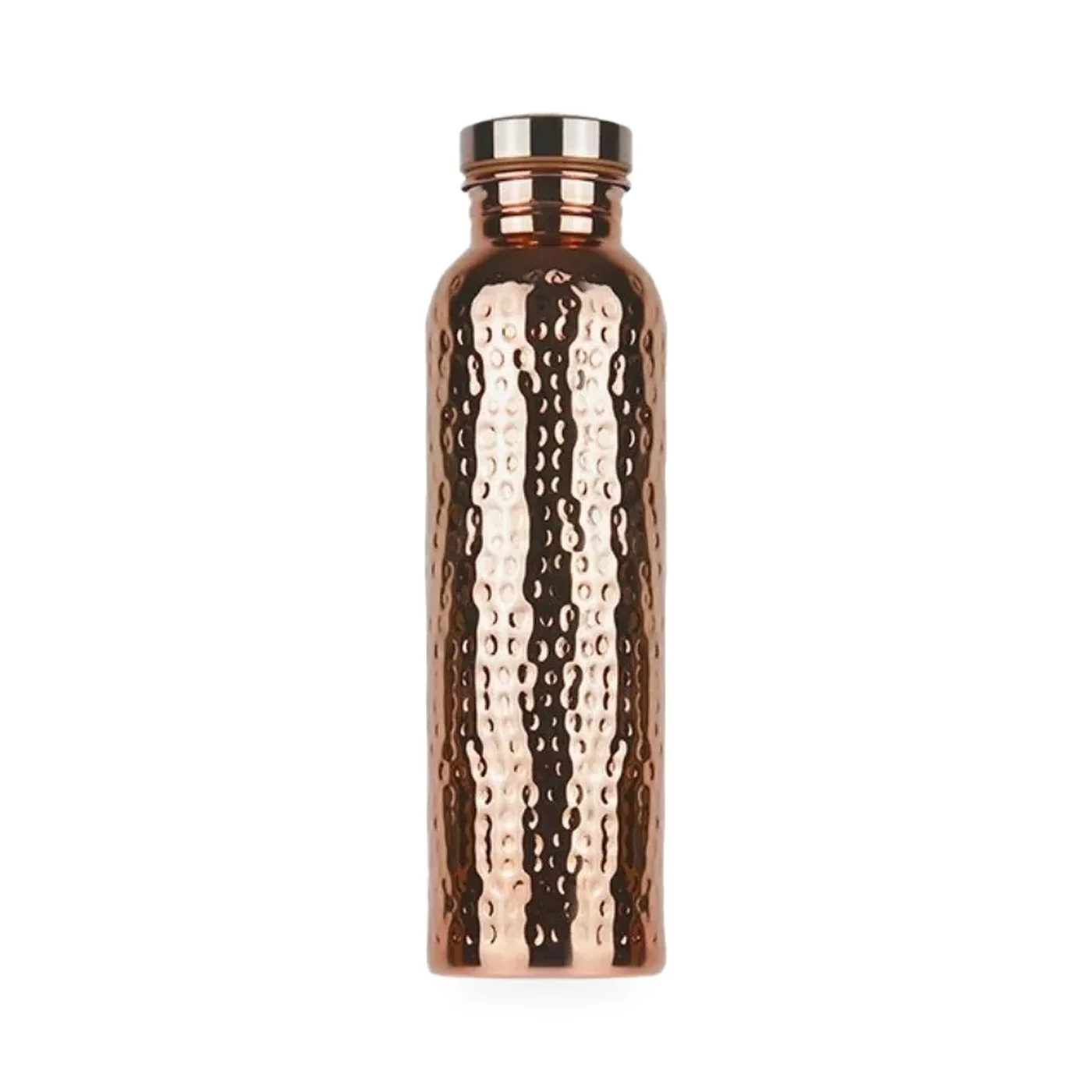
When comparing reusable options, ask for an explanation of the body, cap, seal and intended drinks. A clear material description is more useful than a broad promise about the whole bottle. Puura 800 describes a body with no plastic liner and a hand-hammered copper finish; its cap may contain a seal. That body specification should not be rewritten as a statement that every component is copper, or as proof of a particular result in the water after repeated opening.
Think about practical fit too. A closure that is awkward to clean or difficult for you to operate may not suit daily use, regardless of its appearance. Check the care requirements, replacement arrangements and policy terms before purchase. For the broader research picture, read the bottled-water guide alongside this narrower cap discussion. The useful conclusion is that closure design deserves scrutiny, while claims about measured release need evidence for the actual product and conditions being discussed, rather than an assumption based on a cap’s colour or its outside surface.
Frequently asked questions
Does the study prove every reusable cap releases particles?
No. It examined particular disposable bottles under repeated opening and closing. Its measured mechanism cannot be assigned automatically to every reusable cap, thread or seal. A product-specific claim would need suitable testing.
Is a metal cap necessarily metal throughout?
No. The visible cap shell and an internal seal can be different materials. Ask for a component description and care instructions. The bottle body specification alone does not answer questions about the closure.
Should I remove a seal to avoid using it?
Do not alter the closure to bypass a component. Follow the maker’s instructions, including whether the seal is removable. If you want a different construction, choose a product designed for that arrangement rather than modifying yours.
