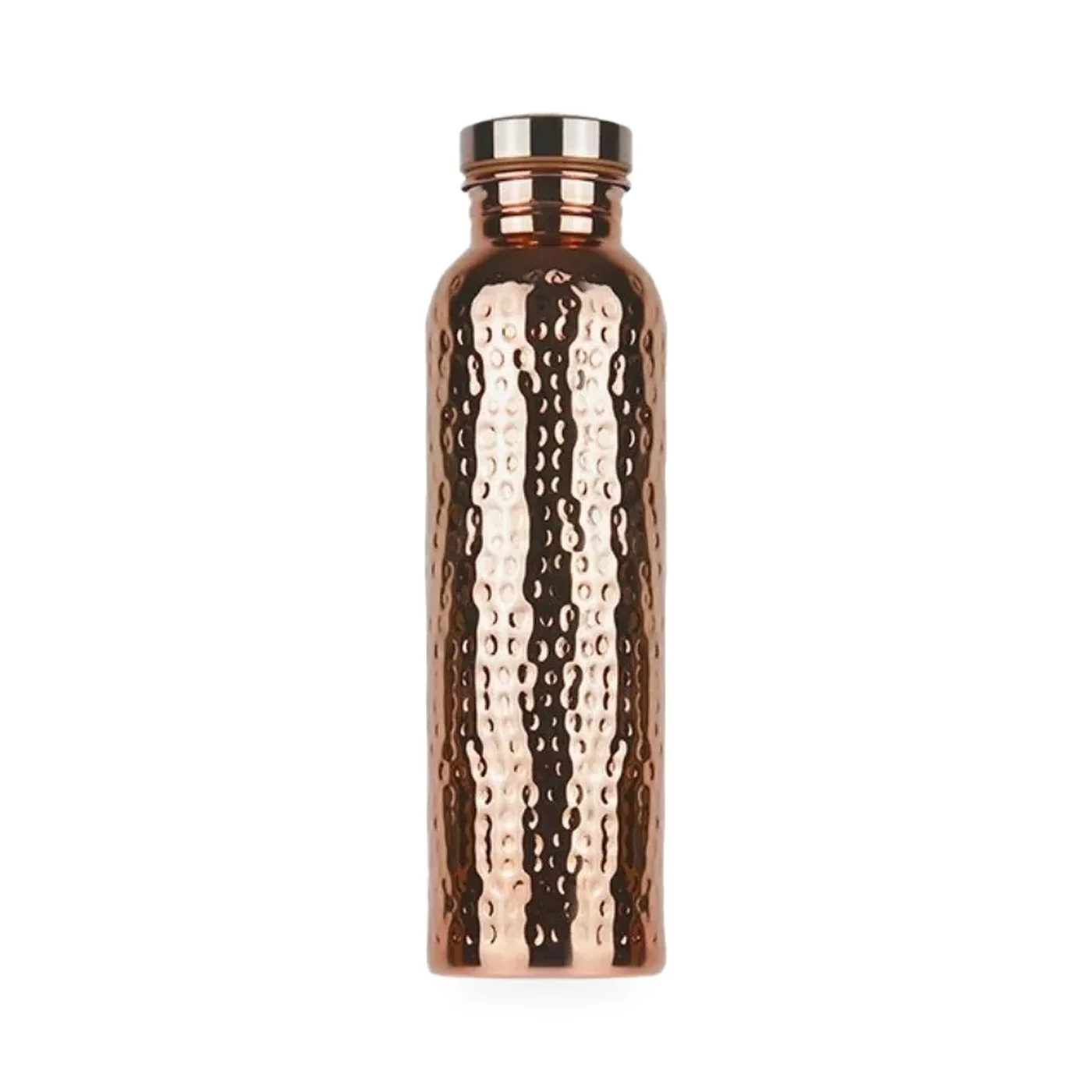
A container defined by its construction
A copper water bottle is a drinking container whose description should explain where copper is used and how the bottle is made. That sounds straightforward, but copper-coloured, copper-plated and copper do not mean the same thing. A photograph can show a warm metallic finish without revealing the material beneath it. Start with the written specification, not the colour or the pattern on the surface.
A copper body has copper through the body material rather than a thin copper layer over another metal. A plated body has a surface layer applied to a different base. Either description still leaves questions about the inside, the base, the neck and the cap. Ask whether the body has a lining or coating and whether the stated material applies to all parts or only the main vessel. For Puura 800, the specification describes a copper-finish stainless steel body with no plastic liner in the body. That is a defined construction claim, not a statement that every component of the assembled bottle is identical.
“A copper water bottle is a drinking container whose description should explain where copper is used and how the bottle is made.”
The body and the cap are separate questions
The bottle body holds the water, while the cap provides a closure through its shape, threads and any sealing components. A metal exterior does not tell you everything about the cap’s interior. Puura’s cap may contain a seal. Describing the body as unlined must therefore not become a claim that the entire cap is linerless or that every part of the product is made from copper.
When comparing bottles, ask for the information that matches your concern. If you want to understand water-contact materials, ask which components touch the contents. If you want to assess maintenance, ask whether any seal is removable and what the maker recommends. Do not prise out a component simply because another bottle’s instructions show that step. A leak-proof closure also depends on condition and correct assembly: inspect the threads, avoid cross-threading and check the cap before putting the bottle in a bag. Those practical details matter more to daily use than treating the word metal as a complete description of the product.
What belongs inside it
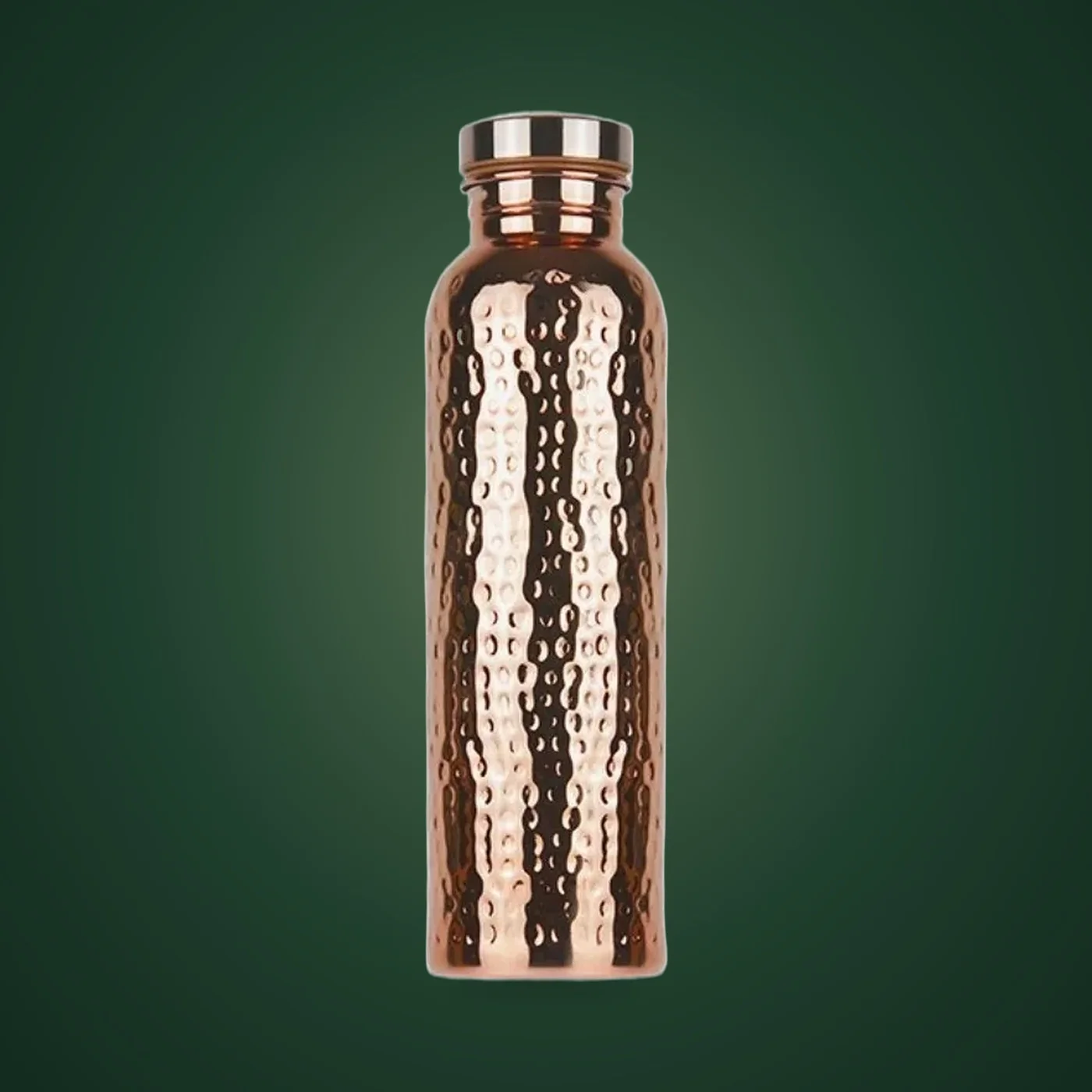
The intended drink is part of the specification, not an optional suggestion. Puura is designed for plain still water. Do not use it for fizzy drinks, juice, milk or hot drinks. A bottle intended for water should not automatically be treated as a flask, cocktail container or general-purpose food vessel. If you routinely carry other drinks, choose a product expressly specified for those uses instead of trying to make one bottle cover every situation.
Use water already suitable for drinking. A copper bottle is not a substitute for water treatment, and filling it does not override a supplier’s notice or solve a problem with an unknown source. Puura makes no health claims. There is also no need to turn filling time into a promised result: an evening refill can be a convenient household habit without implying that leaving water overnight improves it. Decide when to fill, empty and wash the bottle around your day, and follow current source-water advice whenever you are away from your usual supply.
Expect a changing finish and hands-on care
Copper naturally changes colour, and ordinary surface darkening is commonly called patina. That means the bottle may not keep the bright appearance shown in a new-product photograph. Some people enjoy the changing finish; others prefer occasional polishing. Neither preference requires treating every darker patch as a fault. However, unusual deposits, excessive corrosion, physical damage or an unexpected taste call for advice rather than automatic polishing and continued use.
Hand wash Puura with mild washing-up liquid, lukewarm water and a soft cleaning tool, then rinse thoroughly. Clean the cap and threads as well as the body, dry the outside and leave the bottle open to dry inside. Do not use a dishwasher. Hand wash gently with warm water and a little washing-up liquid, then rinse and dry fully. Avoid metal scourers, wire wool and abrasive powders. Do not polish Puura 800’s plated exterior with lemon and salt. Regular gentle cleaning also gives you a chance to notice wear before packing the bottle for the next day.
Choose it for the routine you actually have
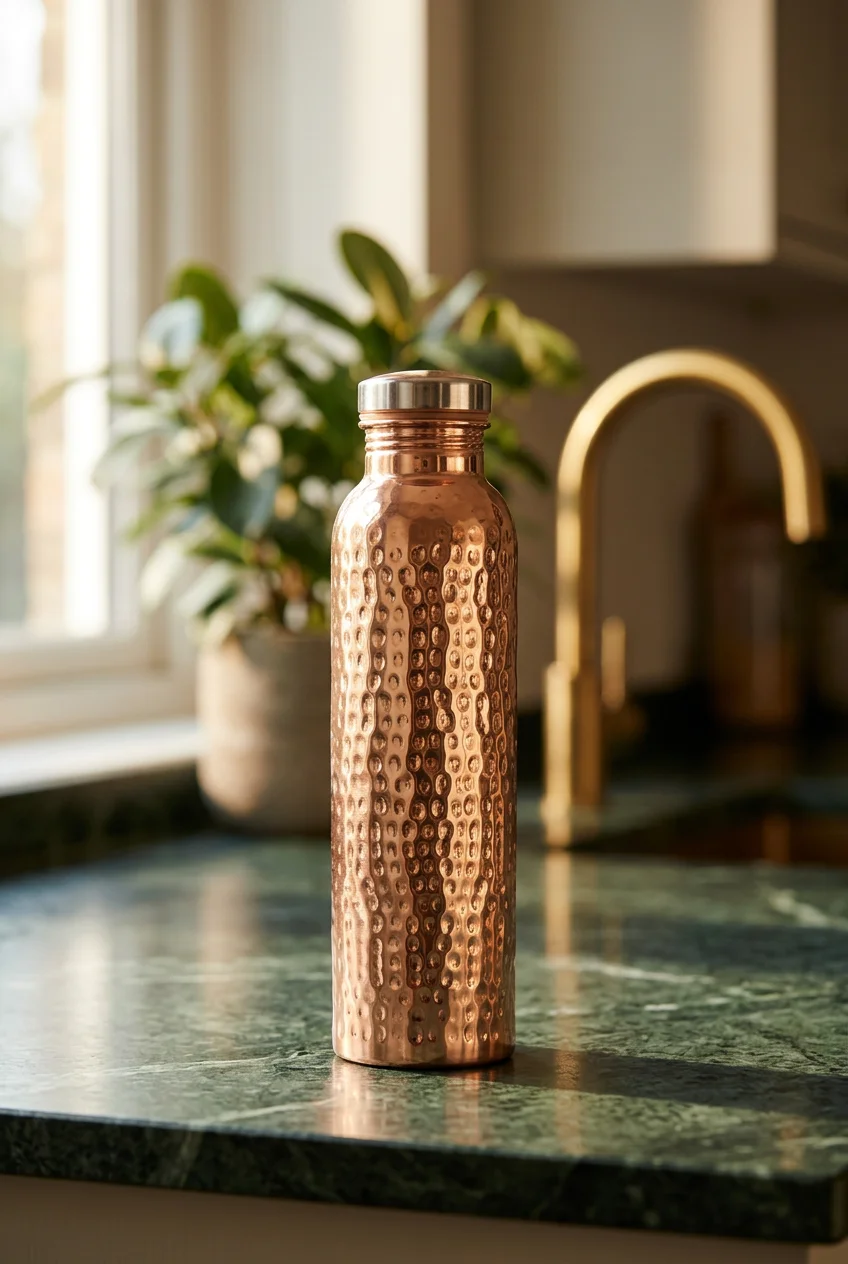
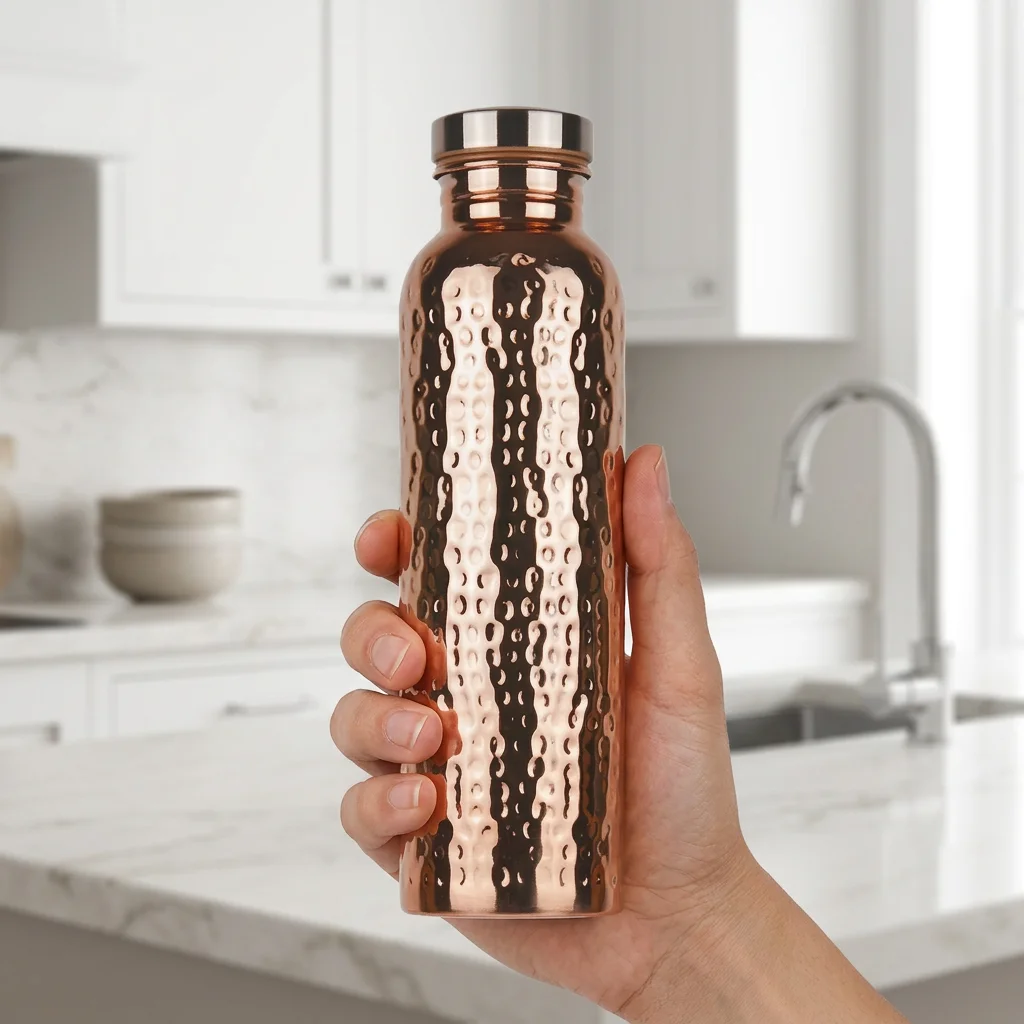
Before buying, imagine an ordinary working day rather than an idealised one. Can you refill where you spend time? Is there somewhere to hand wash and dry the bottle? Will its size fit your bag, and are you comfortable with a finish that changes? Do not infer insulation or dishwasher suitability from the fact that a bottle is metal. Those features require their own product specifications.
Read aftercare terms with the same attention as materials. If you are unsure about a material detail or an existing mark, ask before conducting a scratch test or using an aggressive cleaner. A copper bottle can be chosen for its appearance, construction and place in a refill routine without attaching a health promise or an unsupported environmental comparison. The most useful question is not whether copper is universally best, but whether this particular bottle’s limits and care requirements match how you intend to use it.
Frequently asked questions
Does a copper colour establish the body material?
No. A coloured finish or copper plating can cover another material. Check the body specification and ask for supporting information if construction matters to your decision. Appearance alone cannot establish what lies beneath the surface.
Is the entire cap covered by the unlined-body claim?
No. The body specification does not describe every cap component. Puura’s cap may contain a seal, so a body with no plastic liner must not be presented as a claim about the complete closure.
Do I need to leave water in copper overnight?
No special storage period is required by this guide. Fill the bottle when convenient, keep it clean and use plain still water. Puura makes no health claims about overnight storage or any other routine.
