Start with what the instrument could detect
Research on microplastics in bottled water does not produce a universal particle count for every bottle on a shelf. Each result belongs to a particular sample, preparation procedure and detection method. Read a headline as the beginning of that description, not its conclusion. Ask which water was tested, what sizes the researchers could detect and how they distinguished plastic from other material. Those questions help explain why apparently conflicting reports may actually describe different parts of the same subject.
Microscopy is central to this distinction. An image can reveal a particle’s shape, but appearance alone does not necessarily establish its composition. Techniques that combine imaging with chemical identification can answer a different question from a visual count. Very small particles also need different detection approaches from larger fragments. When a newer method detects material outside an older method’s range, a higher count does not by itself demonstrate that bottled water has changed. It may show that the measurement has become more detailed. Keep the method alongside the headline whenever you share a study.
“Research on microplastics in bottled water does not produce a universal particle count for every bottle on a shelf.”
What the finer-scale bottled-water study adds
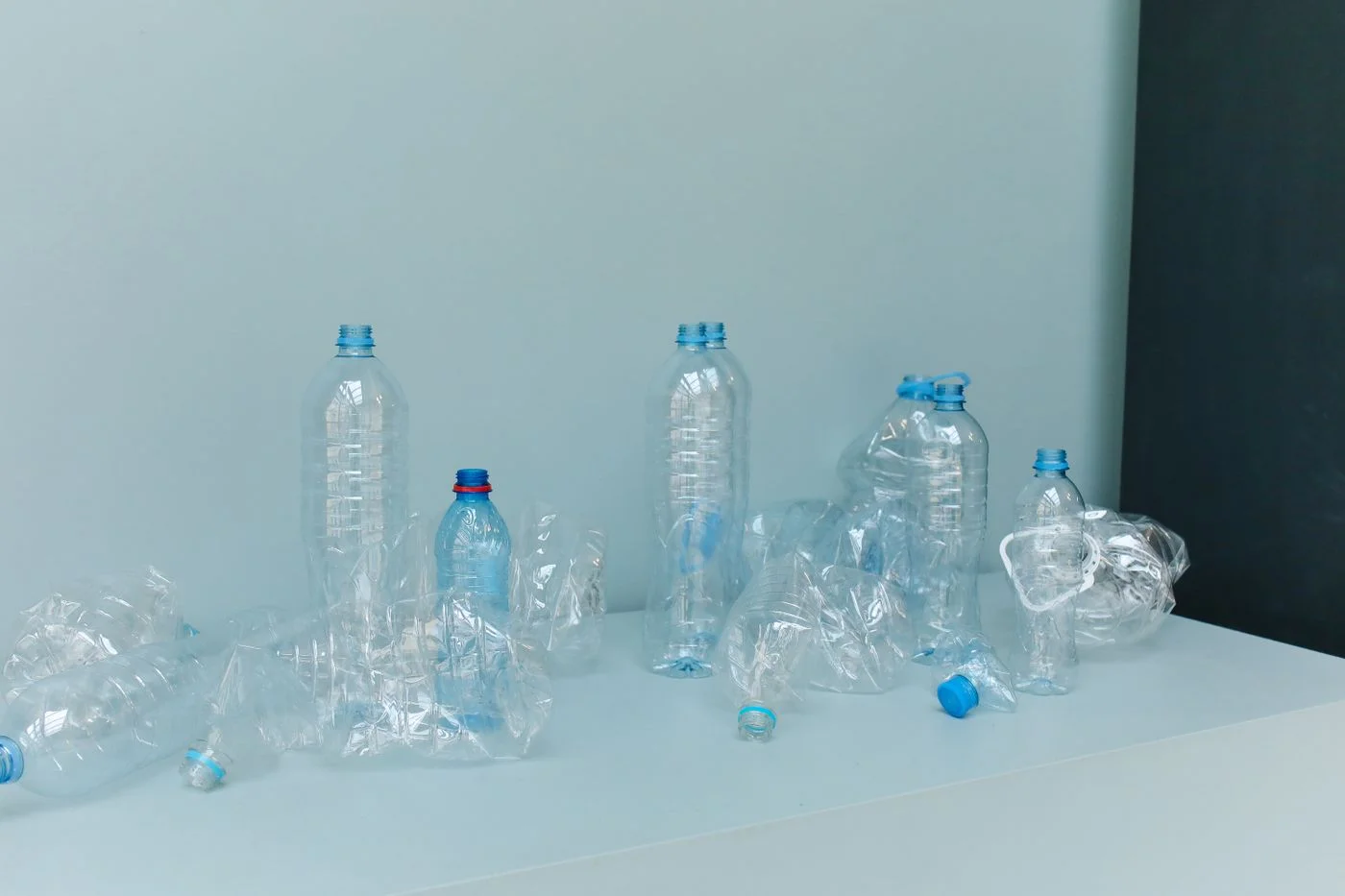
The Columbia and Rutgers research used a technique designed to identify exceptionally small plastic particles in the bottled water tested. Its findings are useful because they extend the discussion beyond particles that older approaches could readily identify. The linked evidence gives the reported count and the distinction between microplastics and nanoplastics. Those figures describe the tested samples and should not be turned into an exact prediction for the bottle in your bag.
The source of a detected particle is a separate question from its presence. Bottle material is a possible contributor, but the university account also identifies water-treatment filters as possible sources. It does not establish that most particles came from the container. Avoid replacing that uncertainty with a simple story in which every particle must have rubbed off the bottle wall. A useful reading note records the water samples, analytical technique, detected materials and acknowledged limitations separately. That makes it easier to distinguish a measured result from an explanation that still needs testing.
Researchers at Columbia and Rutgers universities found around 240,000 plastic particles in an average litre of the bottled water tested; about 90% were nanoplastics, 10–100 times more than earlier estimates.
Columbia & Rutgers universities, PNAS, 2024
This is an average for the samples tested, not a count for every bottle. The university account identifies both bottle material and water-treatment filters as possible sources; it does not establish that most particles came from the bottle.
How to read the earlier bottled and tap comparisons
The SUNY Fredonia work for Orb Media examined bottled-water samples and reported signs of microplastic contamination. Its findings remain relevant, but they should not be treated as interchangeable with the finer-scale research. A study’s particle-size range and identification process shape the result. The evidence attached here preserves the original sample context rather than treating the reported proportion as a promise about every product currently available.
The bottled-versus-tap comparison also needs care. It refers to larger particles and compares the bottled-water work with an earlier tap-water study. It is not a matched test of every local tap supply against every bottled option. Different places, sampling arrangements and methods limit what can be concluded. If you are deciding how to carry water to work, do not rank your own tap and a particular shop bottle from that comparison alone. For questions about your supply, look at the relevant water supplier’s information and any current local notices rather than extrapolating from an international research headline.
In the SUNY Fredonia study for Orb Media, 93% of 259 bottles from 11 brands bought in 9 countries showed signs of microplastic contamination.
State University of New York at Fredonia for Orb Media, 2018
For larger particles, the SUNY Fredonia study for Orb Media found roughly twice as many per litre in bottled water as an earlier study found in tap water.
State University of New York at Fredonia for Orb Media, 2018
Different studies and sampling methods are not a direct test of every bottled and tap supply.
Keep detection, interpretation and uncertainty separate
A laboratory result can establish that particles were detected under a stated method. It does not automatically establish where each particle originated, how exposure varies between people or what a change of container would achieve. Those are separate questions requiring their own evidence. This article does not turn a particle count into a personal outcome or suggest that choosing a particular bottle resolves the broader research questions.
The World Health Organization review is included as a balancing source, with its date and limitations preserved in the evidence record. It called for better evidence, and should not be used as a permanent answer to every later study. Equally, a newer detection technique does not erase the need for careful interpretation. Read the review and newer papers as contributions with different scopes. When discussing the subject with someone else, identify what was measured first, then explain what remains uncertain. Avoid describing a bottle as guaranteed to remove all contact with particles simply because its main body uses a different material.
The World Health Organization’s 2019 review found no evidence of a health risk from microplastics in drinking water at then-current levels, said data was limited, called for more research and for less plastic pollution.
Make a practical choice without promising a particle count
Start with the parts of your routine you can actually inspect: the container, cap, cleaning instructions and refill opportunities. If you buy bottled water, follow the storage instructions and avoid using visibly damaged packaging. If you carry a reusable bottle, choose one suited to your drinks and cleaning habits. Neither action establishes the particle content of the water; that would require appropriate testing of the water and the complete system it passes through.
For a copper bottle, check the body specification separately from the cap and any seal. Puura 800 specifies a body with no plastic liner and a copper-finish exterior, not a guarantee about every component or a measured particle reduction. Use plain still water, hand wash and allow the bottle and cap to dry as instructed. If your main concern is repeated opening, the cap guide explains the abrasion research and its limits. If you are comparing materials, look at intended use and maintenance alongside the body material. A bottle that fits your routine is a practical choice, not a substitute for evidence about its contents.
Frequently asked questions
Do all bottled waters have the same particle count?
No. Results depend on the sampled water, particle sizes and detection method. A study average is not a specification for every bottle or batch. Read the attached evidence before applying a headline to a purchase.
Does microscopy show where a particle came from?
Not necessarily. Imaging and chemical identification can help describe particles, but attributing them to a bottle wall, closure or treatment stage needs further evidence. Presence and origin are different questions.
Can a metal bottle guarantee water without particles?
No such guarantee follows from its body material. Consider the source water, the whole container and its components. Puura’s body specification is not a particle-removal claim.
